
PVC Extrusion Die Troubleshooting 3 Pro Tips to Fix Bubbles & Surface Peeling!

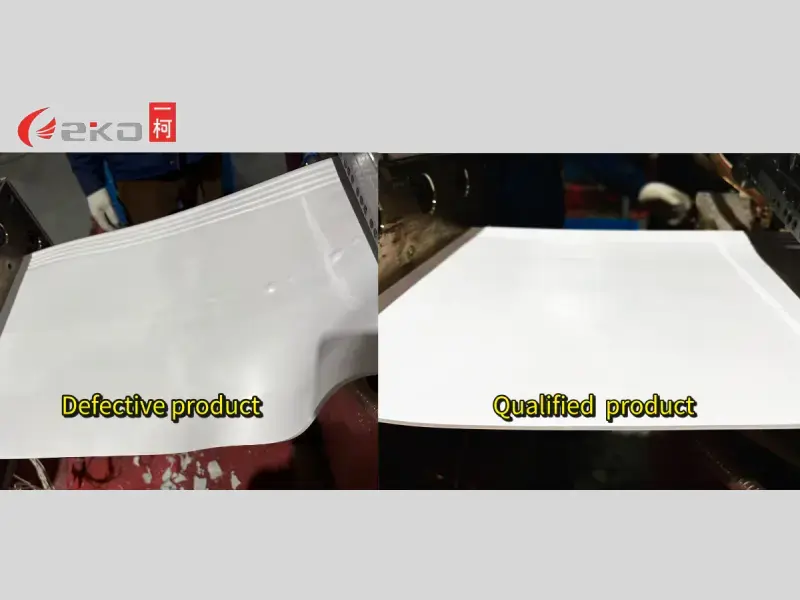
Introduction: Amid the manufacturing industry’s drive for “cost reduction and efficiency improvement”, the quality stability of PVC extruded products directly impacts enterprise competitiveness. A recent case where a leading enterprise faced order delays due to bubble issues in die output has drawn industry attention—what seems like a minor process defect can become an “Achilles’ heel” restricting production. Combining the latest process standards and practical experience, this article systematically breaks down solutions to bubbles and peeling from three core dimensions: raw material processing, die design, and process parameters.
I. Raw Material Pretreatment: Cut Off the “Bubble Breeding Ground” at the Source
1.1 Drying Process: High-Temperature Dehumidification is Key
- Current Pain Point: When the moisture content of PVC resin exceeds 0.05%, the high-temperature extrusion process can cause a “boiling effect”, forming bubbles.
- Solution: Use a double-cone rotary dryer to dry the material at 80-90°C for 3-4 hours, ensuring the moisture content of the raw material is ≤0.03%.
- Illustration Suggestion: Working flow chart of drying equipment + comparison data chart of moisture content detection
1.2 Additive Compatibility: Avoid Gas Generation from Chemical Reactions
- Key Focus: Match the acid-base properties of stabilizers and lubricants. For example, when compounding calcium-zinc stabilizers with zinc stearate, control the stearic acid content to ≤1.5% to prevent decomposition and CO₂ generation.
- Industry Update: The newly released “Specifications for the Use of PVC Extrusion Molding Additives” in 2025 clearly requires that compound additives must pass a 72-hour thermal stability test.
II. Die Structure Optimization: Build a “Dead-Corner-Free” Runner System
2.1 Runner Design: Eliminate Melt Retention Zones
- Classic Case: A profile die had material accumulation at the weld line due to an excessively small splitter cone angle (<30°). By adjusting to a 45° streamlined splitter structure, the bubble defect rate decreased by 72%.
- Design Points:Control the compression ratio between 3:1 and 5:1Use a gradual runner depth to avoid sudden diameter expansion
2.2 Lip Precision: Micron-Level Control to Solve Peeling
- Common Misconception: Uneven lip clearance can cause sudden changes in local melt pressure, forming “shark skin” defects.
- Solution: Use a laser interferometer to calibrate lip parallelism, controlling the error within ±0.01mm, and cooperate with an automatic temperature control system.
III. Process Parameter Debugging: Dynamically Balance Extrusion Stability
3.1 Temperature Curve: Sectional Temperature Control to Solve Degradation Problems
ZoneTemperature Range (℃)Key FunctionFeeding Zone140-160Prevent premature plasticization of raw materialsCompression Zone170-185Achieve melt densificationHomogenization Zone165-175Reduce thermal degradation risk
3.2 Screw Speed and Traction Speed: Matching is the Core
- Empirical Formula: Traction speed = Screw speed × Pitch × 0.85 (adjust dynamically according to material viscosity)
- Real-Time Monitoring: Install a melt pressure sensor (recommended 50mm before the die entrance) to control pressure fluctuations ≤±5bar.
Conclusion: In the era of Intelligent Manufacturing 2.0, quality control of PVC extrusion dies has shifted from “experience-based exploration” to “data-driven” management. Enterprises can introduce AI visual inspection systems (such as the one deployed by a certain enterprise with a defect recognition accuracy rate of 99.2%) to achieve real-time early warning of defects such as bubbles and peeling. Mastering the three solutions in this article will enable “mutual promotion” of production efficiency and product quality!
Interactive Topic: Have you encountered special causes of bubbles in production? Welcome to share your cases in the comment section. We will select 3 industry colleagues to receive the electronic version of the “PVC Extrusion Die Maintenance Manual”!
#PVCExtrusion #PlasticsProcessing #ManufacturingTips #DieMaintenance #IndustrialTech #ProblemSolving #ProductionHacks #EngineeringExcellence